
Returns and compliance software for aerosols and pressurised goods.
The most commonly mis-shipped dangerous good in ecommerce returns.
ReturnMate is returns and compliance software for Shopify merchants selling aerosols and pressurised goods. It classifies each SKU as Class 2.1 or 2.2 under UN1950 with its limited quantity flag, requires photo evidence before a return label exists, produces the transport document that matches the jurisdiction the consignment moves in — ADG 7.9, US DOT 49 CFR, UK and EU ADR, IATA and IMDG — and routes the shipment to a carrier that will actually accept it.
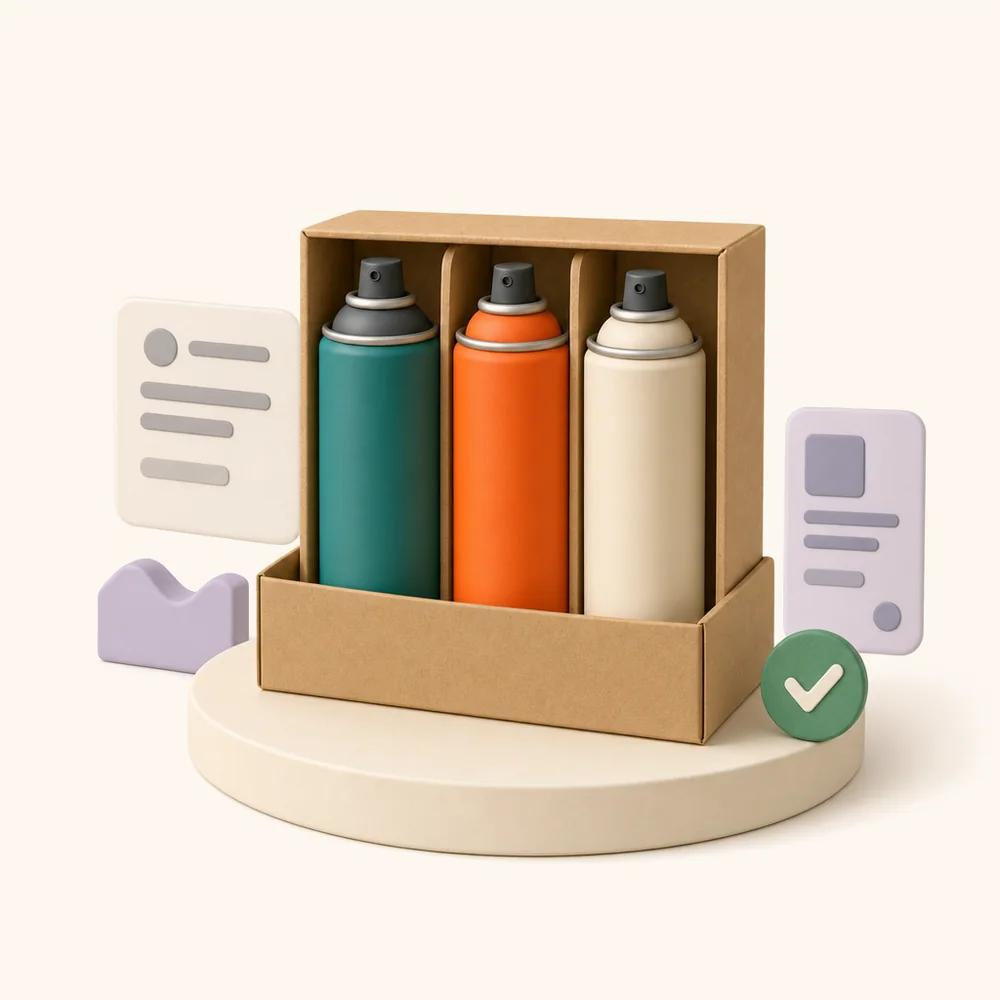
Four things a generic returns app gets wrong here.
Merchants usually get outbound aerosol shipping right — and then send a plain return label for the same product. The return is a fresh consignment with the same obligations, and that's where the category quietly goes wrong.
The return leg is a new shipment
A return label for an aerosol is a dangerous goods consignment, not an afterthought. It needs the same classification and documentation the outbound leg had.
A used can isn't sealed retail stock
A partially used can does not necessarily qualify for the same exceptions the sealed one did — and that determination belongs to you, not the customer.
The paperwork changes by jurisdiction
The same UN1950 consignment produces a different document depending on where it moves — framework, certification wording, emergency contact and units all switch.
Carrier acceptance is the final gate
Some carriers and services will not carry flammable aerosols at all, regardless of how good the paperwork is.
- Flammable and non-flammable aerosols fall into different divisions with different rules
- Limited quantity provisions differ by jurisdiction and are easy to over-claim
- Sometimes the right answer is that the can shouldn't travel at all
- What DG handling and surcharges actually cost you is visible in analytics
Classification and the right document, per jurisdiction.
The hazard profile lives on the SKU, so every future RMA inherits it — and the transport document is selected from the shipment rather than assembled by whoever picks up the ticket.
Classification logic, transport documents and the full hazard-class coverage are detailed on dangerous goods handling; the merchant-side practice is covered in dangerous goods returns in Australia. ReturnMate supports the compliance workflow — it doesn't replace your own regulatory obligations or advice.
Two opened cans, one correct answer.
The same return carries a classification question, a judgement that stays with you, and a carrier question. Resolved on one record, the plain-label mistake never gets a chance to happen.
Which division is this, really?
A flammable propellant makes it Class 2.1, with rules a non-flammable cosmetic spray never sees. The difference is set on the SKU, once.
Classification inherited from the product profile — not decided by whoever packs the box.
Does a part-used can still qualify?
Whether the limited quantity exception still applies to an opened can is a classification decision — and it stays with the shipper, made on evidence.
Photos required before a label exists; the hold is the mechanism, the decision stays yours.
Will the carrier even take it?
Paperwork doesn't oblige a carrier to accept flammable aerosols. Acceptance is the final gate on every consignment.
Non-DG services suppressed; classification, documents and acceptance stored against the RMA.
What the customer is allowed to choose.
The portal decides the return method from the product profile, before the customer sees an option — and for a damaged or leaking can, the right method is often no shipment at all.
DG road service
Australia Post is excluded automatically; the consignment routes to StarTrack or TNT by weight, with the matching document.
Remote Resolve
Refund or replacement raised without a return shipment being created, when the can shouldn't travel.
Plain parcel label
Never offered for this category. Suppressed by the product profile rather than left to staff judgement.
- Leaking or damaged cans condition-captured at receiving, before they reach a shelf
- Mixed returns documented per item, so several classes never flatten into one
- Limited quantity thresholds are not auto-enforced — the determination stays with the shipper
- DG handling costs and carrier surcharges reported in analytics
Method selection and evidence capture are on the customer portal; condition capture at the dock is on receiving.
Aerosol returns questions.
Does ReturnMate support US DOT 49 CFR for aerosols, or only Australian ADG?
Both. The transport document is selected from the shipment, so a US domestic consignment produces a Hazardous Materials Shipping Declaration to 49 CFR 172.200–172.204 with the DOT certification, your 24-hour emergency contact and weights in pounds, and stating that limited quantities are packed per 49 CFR 173.306 and marked per 172.315. An Australian consignment produces an ADG 7.9 document citing ADG Chapter 3.4 instead, and a UK or EU one an ADR document. ReturnMate produces the shipping paper, not the package marking — that is applied by whoever packs the carton.
Are limited quantity thresholds enforced automatically?
No. The limited quantity flag is set by you against the SKU and the document reflects it with the correct citation for the jurisdiction. ReturnMate does not validate the threshold or decide whether the exception applies — that determination stays with the shipper.
What about used or partially full cans?
Whether a part-used can still qualifies for a limited quantity exception is a classification decision, and it is yours to make. ReturnMate gives you the mechanism to hold the return for inspection — require photos on the return reason, capture the condition at receiving — before a label is generated.
Does it produce the package marking?
No. The document and the shipping label are generated; hazard labels and limited quantity package markings are applied by you or your warehouse.
Which carriers will accept aerosol returns?
In Australia, Australia Post is excluded for DG automatically and the consignment routes to StarTrack or TNT depending on weight. Some services will not accept flammable aerosols regardless of paperwork, so carrier acceptance is always the final gate — and the classification, documents and acceptance are stored against the RMA.
Can the portal require photos before a label is issued?
Yes. The dangerous goods return reason can require photo evidence at submission, so the decision about whether and how a can comes back is made on what you can see — batch stamps, damage, fill state — before a label exists rather than after the parcel arrives.
How much does ReturnMate cost?
ReturnMate has a Free plan at US$0/month including 5 RMAs. Starter is US$49/month for up to 50 RMAs, with Growth, Ops, Scale and Enterprise plans available for larger operations. Full details are on the pricing page at returnmate.io/pricing.
Related capabilities.
Classification, documents and carrier filtering.
Every hazard class you ship, resolved at label time rather than argued at the depot.
Read more →§ RECEIVINGScan-based check-in, grading and quarantine.
Where a leaking can is caught at the dock instead of discovered on a shelf.
Read more →Stop sending plain labels for pressurised cans.
See classification, jurisdiction-correct documents and evidence gating running on your own catalogue. Billed through Shopify, cancel from inside Shopify.